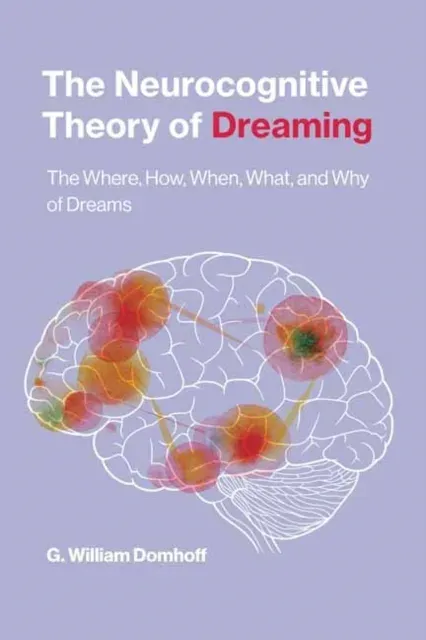
Neurocognitive Theory of Dreaming
by G. William Domhoff
Title:
Neurocognitive Theory of Dreaming
Author:
G. William Domhoff
Format:
Paperback
Number of pages:
376 pages, 6
Publisher:
MIT Press Ltd
ISBN-13:
9780262544214
EAN:
9780262544214
Publication Date:
04/10/2022
Classifications:
Interdisciplinary studies
Weight (g):
578
Dimensions (mm):
153 x 229 x 28
Publication Country:
United Kingdom
Language:
English
Condition:
New
Price:£48.96
4 copies in stock
Qty

Description
A comprehensive neurocognitive theory of dreaming based on the theories, methodologies, and findings of cognitive neuroscience and the psychological sciences.G. William Domhoff's neurocognitive theory of dreaming is the only theory of dreaming that makes full use of the new neuroimaging findings on all forms of spontaneous thought and shows how well they explain the results of rigorous quantitative studies of dream content. Domhoff identifies five separate issues—neural substrates, cognitive processes, the psychological meaning of dream content, evolutionarily adaptive functions, and historically invented cultural uses—and then explores how they are intertwined. He also discusses the degree to which there is symbolism in dreams, the development of dreaming in children, and the relative frequency of emotions in the dreams of children and adults. During dreaming, the neural substrates that support waking sensory input, task-oriented thinking, and movement are relatively deactivated. Domhoff presents the conditions that have to be fulfilled before dreaming can occur spontaneously. He describes the specific cognitive processes supported by the neural substrate of dreaming and then looks at dream reports of research participants. The 'why' of dreaming, he says, may be the most counterintuitive outcome of empirical dream research. Though the question is usually framed in terms of adaptation, there is no positive evidence for an adaptive theory of dreaming. Research by anthropologists, historians, and comparative religion scholars, however, suggests that dreaming has psychological and cultural uses, with the most important of these found in religious ceremonies and healing practices. Finally, he offers suggestions for how future dream studies might take advantage of new technologies, including smart phones.
Books under Interdisciplinary studies

MODERN STRATEGY P
GRAY
£71.99

Effortless Action: Wu-Wei as Conceptual Metaphor and Spiritual Ideal in Early China
Edward Slingerland
£33.74

1988 Lectures and Memoirs
The British Academy
£156.75

Yalta
S. M. Plokhy
£9.07

Aid on the Edge of Chaos
Ben (Independent consultant and writer) Ramalingam
£28.79

Causes and Effects of 20th Century Wars: IB History Print and Online Pack: Oxford IB Diploma Programme
David Smith
£75.22

Politics in the Developing World
Oxford University Press
£65.99

Economic Development: What Everyone Needs to Know
Marcelo Giugale
£9.07

We Are the Voice of the Grass: Interfaith Peace Activism in Northern Uganda
David A. Hoekema
£30.22

TIMES QUICK XWORD 24 PB : 100 General Knowledge Puzzles
The Times Mind Games
£6.59