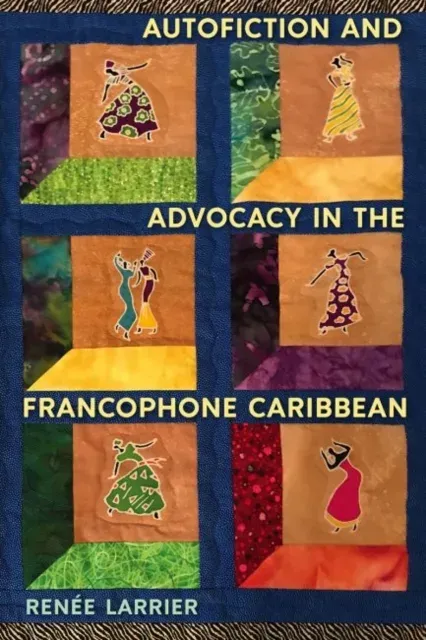
Autofiction and Advocacy in the Francophone Caribbean
by Renée Larrier
Title:
Autofiction and Advocacy in the Francophone Caribbean
Author:
Renée Larrier
Format:
Paperback
Number of pages:
200 pages
Publisher:
Longleaf Services on behalf of U of Florida Press
ISBN-13:
9780813068237
EAN:
9780813068237
Classifications:
Literature: history and criticism
Weight (g):
430
Dimensions (mm):
151 x 229 x 12
Publication Country:
United Kingdom
Language:
English
Condition:
New
Price:£30.32
1 copies in stock
Qty

Description
"Very refreshing in the understanding of Caribbean literature . . . Succeeds in blending close readings of specific texts with a constant awareness of the larger picture. . . . From a theoretical complexity that calls on Glissant, Fanon, Ngugi, Benito-Rojo among others, this profoundly human exploration of autofiction and advocacy in Francophone Caribbean literature study does not succumb to the temptation of theory; that is, she does not demand texts illustrate a rigid theoretical frame; the reverse is true throughout the study."--Cilas Kemedjio, University of RochesterLarrier breaks new ground in analyzing first-person narratives by five Francophone Caribbean writers--Joseph Zobel, Patrick Chamoiseau, Gisele Pineau, Edwidge Danticat, and Maryse Conde--that manifest distinctive interaction among narrators, protagonists, characters, and readers through a layering of voices, languages, time, sources, and identities. Employing the Martinican combat dance--danmye--as a trope, the author argues that these narratives can be read as testimony to the legacy of slavery, colonialism, and patriarchy that denied Caribbean people their subjectivity. In chapters devoted to Zobel, Chamoiseau, Pineau, Danticat, and Conde--who come from Martinique, Guadeloupe, and Haiti--Larrier probes the presence, construction, and strategy of the first-person narrator, which sometimes shifts within the text itself. Providing a perspective different from European travel literature, these texts deliberately position the "I" as a witness and/or performer who articulates experiences ignored or misinterpreted by sojourners' more widely circulated chronicles. While not purporting to speak for others, the "I" is concerned with transmitting what he or she saw, heard, experienced, or endured, therefore disrupting conventional representations of the Francophone Caribbean. Moreover, in modeling authenticity and agency, autofiction is also a form of advocacy. Renee Larrier is associate professor of French at Rutgers University.
Books under Literature: history and criticism

Studies in Classic American Literature
D. H. Lawrence
£10.72

The Mirror and the Lamp: Romantic Theory and the Critical Tradition
Meyer Howard Abrams
£18.14

Roxana
Daniel Defoe
£10.72

Japanese No Dramas
£12.37

Miasma: Pollution and Purification in Early Greek Religion
Robert Parker
£158.63

Passion and Action
Susan (Department of Philosophy James
£68.85
Trumpet-Major
Thomas Hardy
£10.72
Commentary on Thucydides: Volume I: Books i-iii
Simon (Fellow and Tutor in Ancient History Hornblower
£219.38

Unity in Greek Poetics
Malcolm F. Heath
£165.00

Micromegas and Other Short Fictions
Francois Voltaire
£10.72